
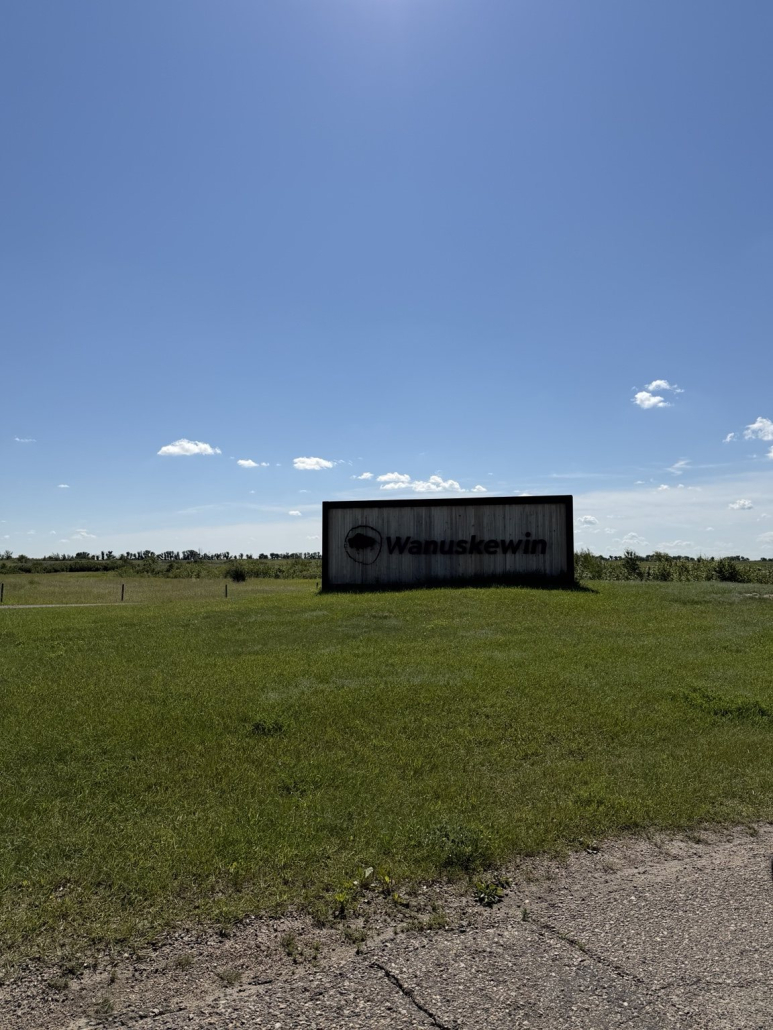
More Than a Trail: A Day at Wanuskewin
ELLA-VATED TRAILS
Exploring Saskatchewan trails through storytelling, small adventures, and occasional navigational failure.
By Ella Gidluck, SaskTrails Storyteller
More Than a Trail: A Day at Wanuskewin
Wanuskewin was not originally part of my Saskatoon-area itinerary.
Once I realized how close it was to Warman, though, it felt silly not to make time for one more stop before heading home.
My grandma joined me again, and we arrived around 11 a.m. with a plan: explore the trails before the afternoon heat really set in, grab lunch at the on-site restaurant, spend some time in the exhibits and stay for the daily cultural presentation.
It ended up being one of the most memorable stops of the trip.
First Impression: Cool Bison
Before heading onto the trails, we passed a series of bison sculptures near the Visitor Centre.
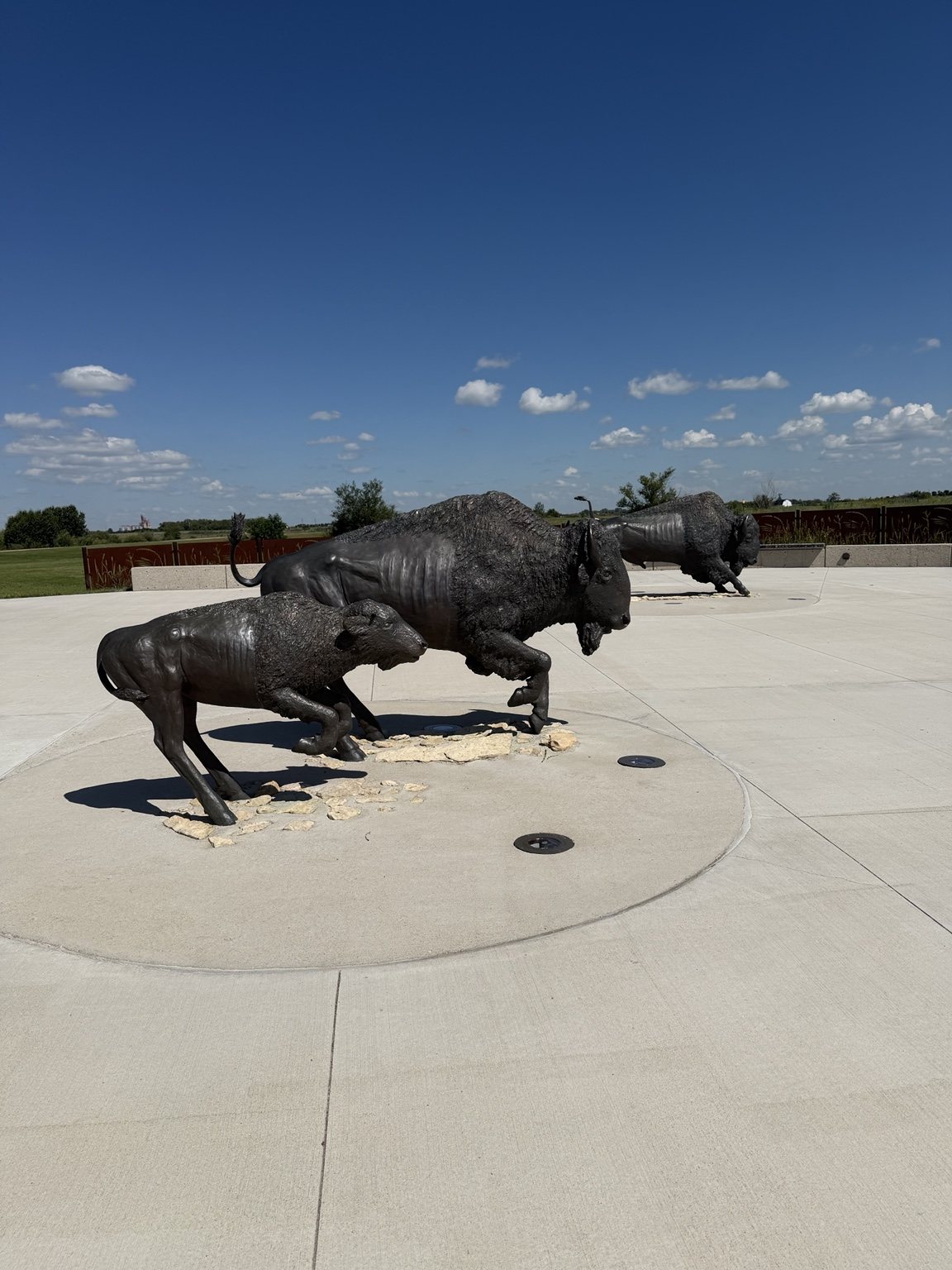
My grandma suggested we take a photo with them. At the time, I mostly registered them as very cool bison sculptures.
That changed later.
Down Into the opimihāw Valley
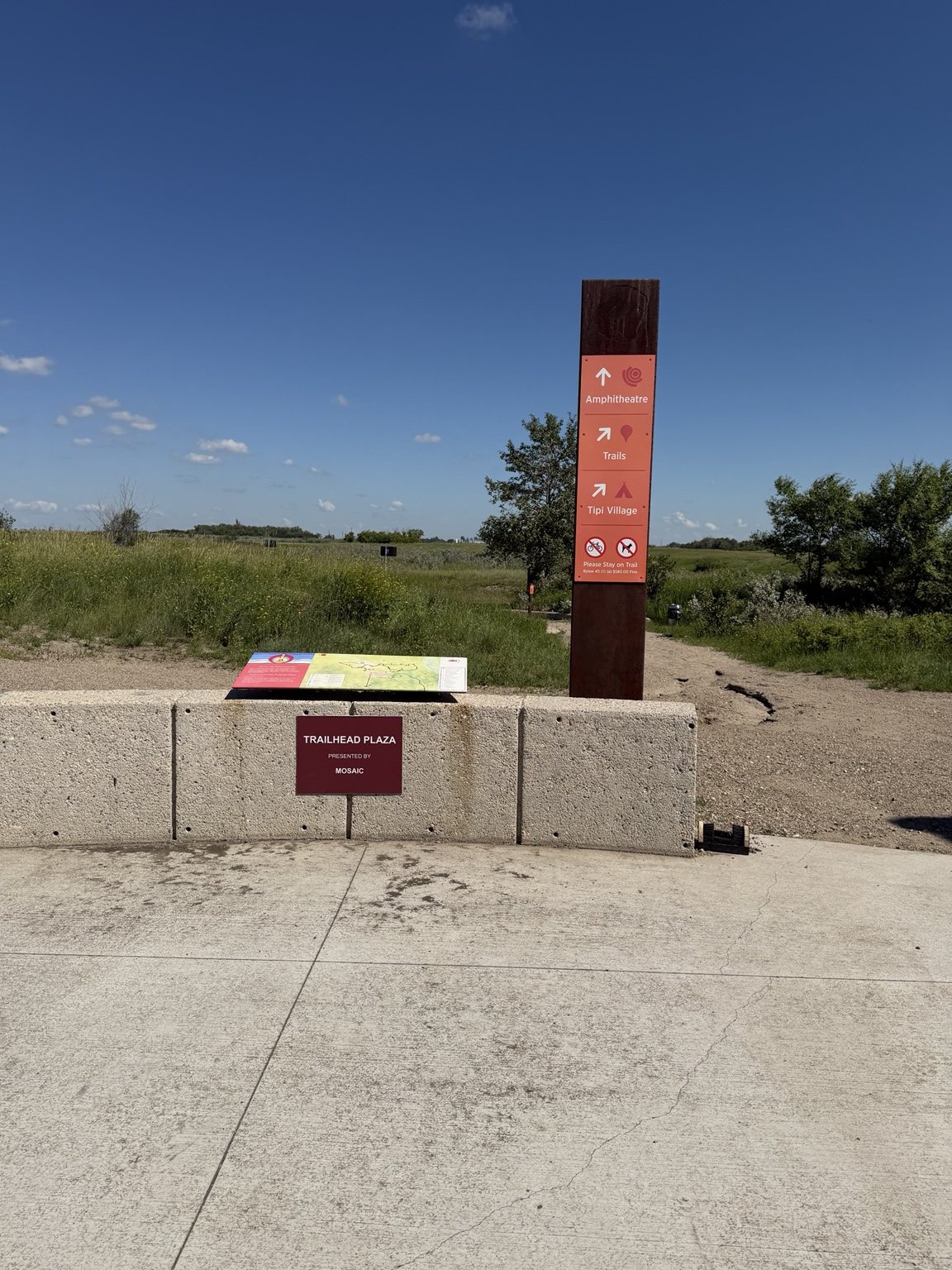
Wanuskewin has a nearly seven-kilometre trail network through the opimihāw Valley, with routes that vary in distance and difficulty.
We took our time, partly because it was another scorching summer day and partly because my grandma and I are physically incapable of walking past an interpretive sign without reading the entire thing.
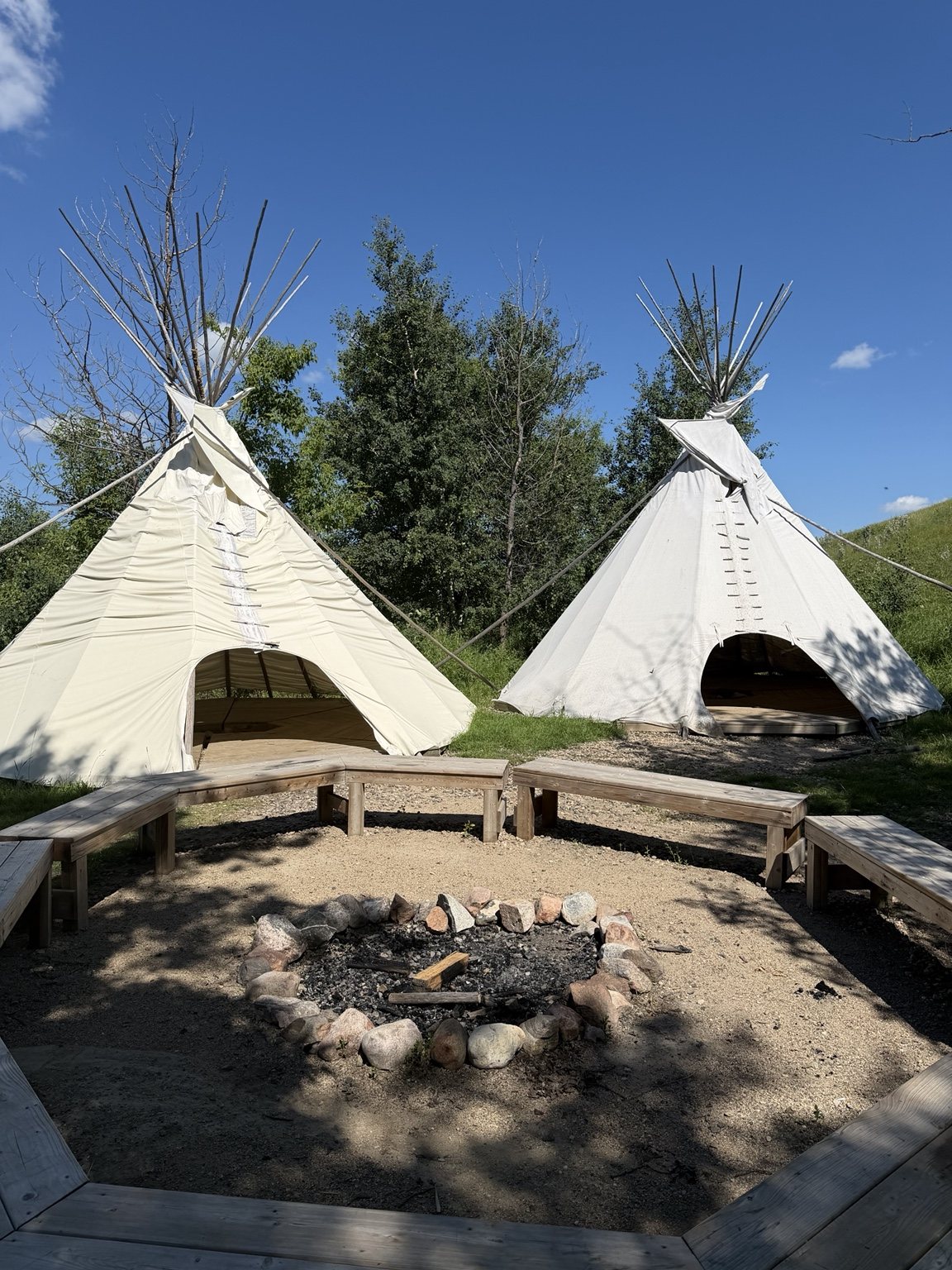
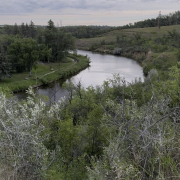
The terrain changed constantly. We moved through open prairie, thick vegetation, creek-side sections, bridges and hills that made us work for the views.
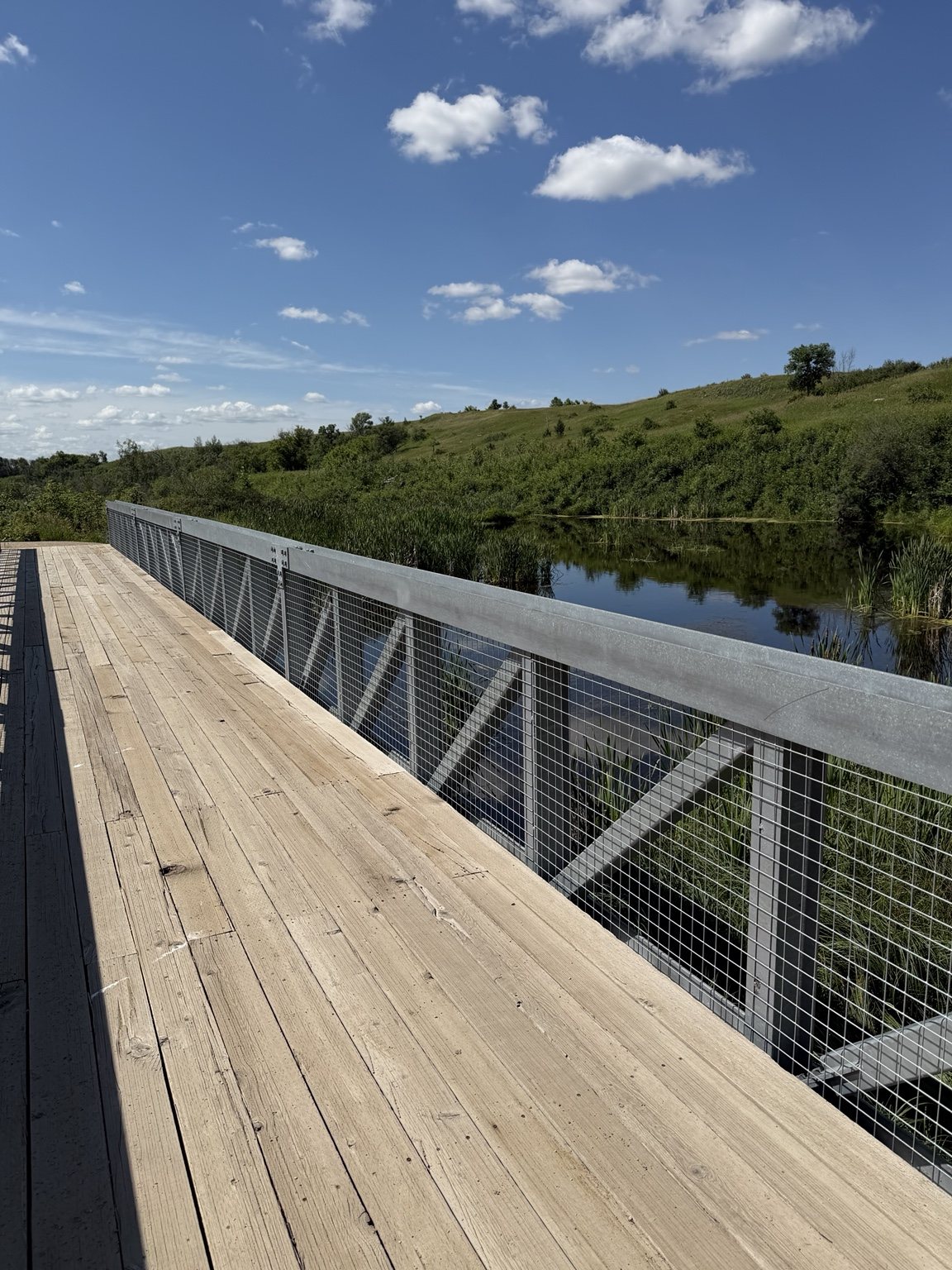
Some sections were easier than others. In the heat, Grandma and I took breaks on the hills and kept moving at our own pace.
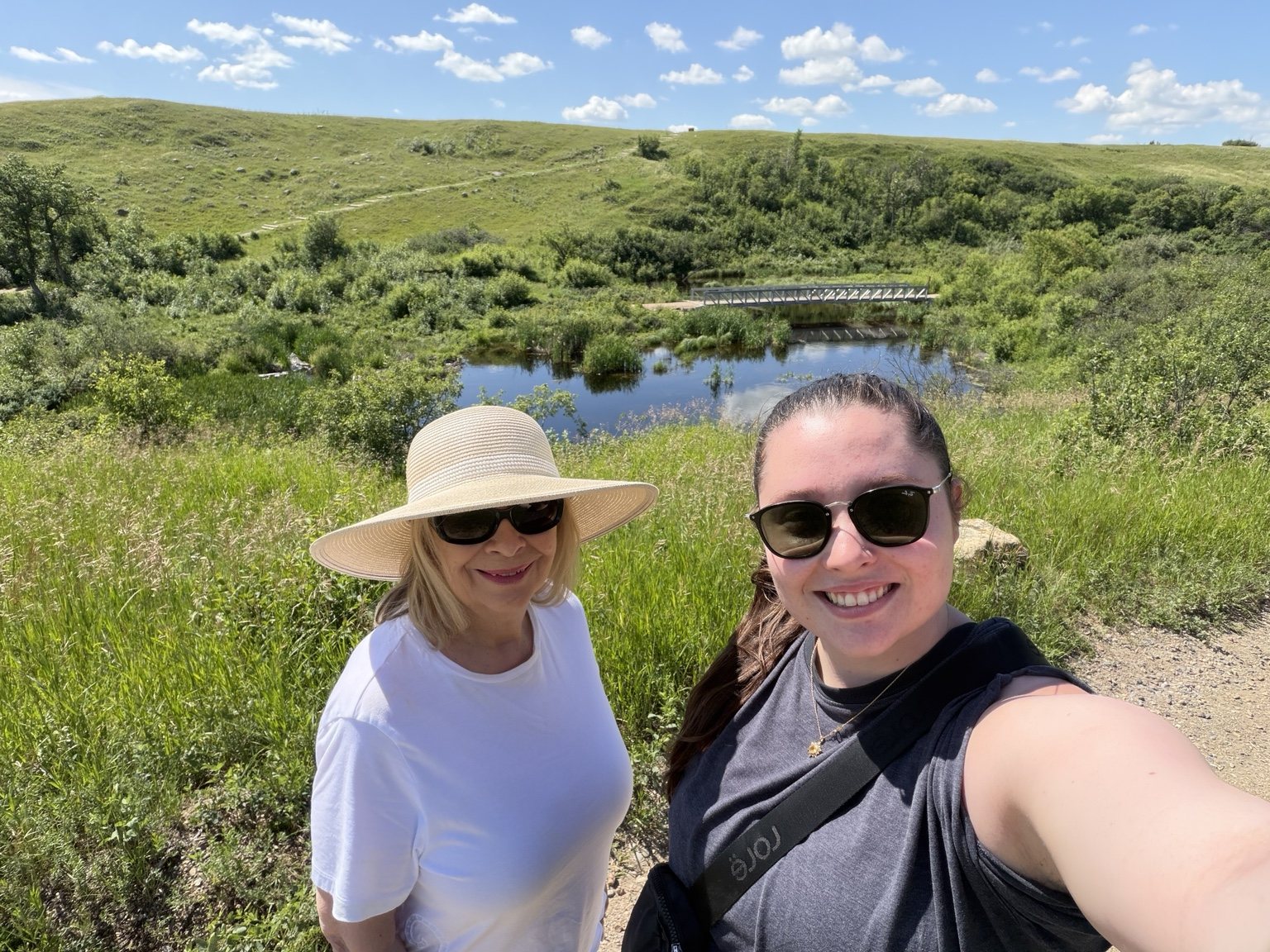
One of my favourite moments was reaching a lookout and being able to spot the bridge below. You could physically see how far you had travelled through the valley.
Learning the Story in the Landscape
The interpretation along the trails is what made Wanuskewin feel different from every other stop on the trip.
At the opimihāw Bison Jump, the signs walked us through how Northern Plains Indigenous peoples used the shape of the landscape during communal bison hunts. The interpretation explained the roles people took on, the formation used to guide the herd and the relationship between people, bison and the land.
Because the story was being explained in the exact landscape where these practices took place, it felt much more immediate than reading the same information on a wall somewhere else.
Then It Clicked
When we came back toward the Visitor Centre, we passed the sculptures again.
This time, we understood what we were looking at.
The arrangement of the bison and people was recreating the bison-jump story we had just learned on the trail. The figures behind the rocks, the positioning and the movement of the herd suddenly made sense.
It was one of those excellent museum-brain moments where information you learned twenty minutes earlier changes what you see in front of you.
We also picked up a vocabulary correction during the visit. The animal I had casually been calling a buffalo is a bison. Consider me educated.
The Bison Viewing Area, Minus the Bison
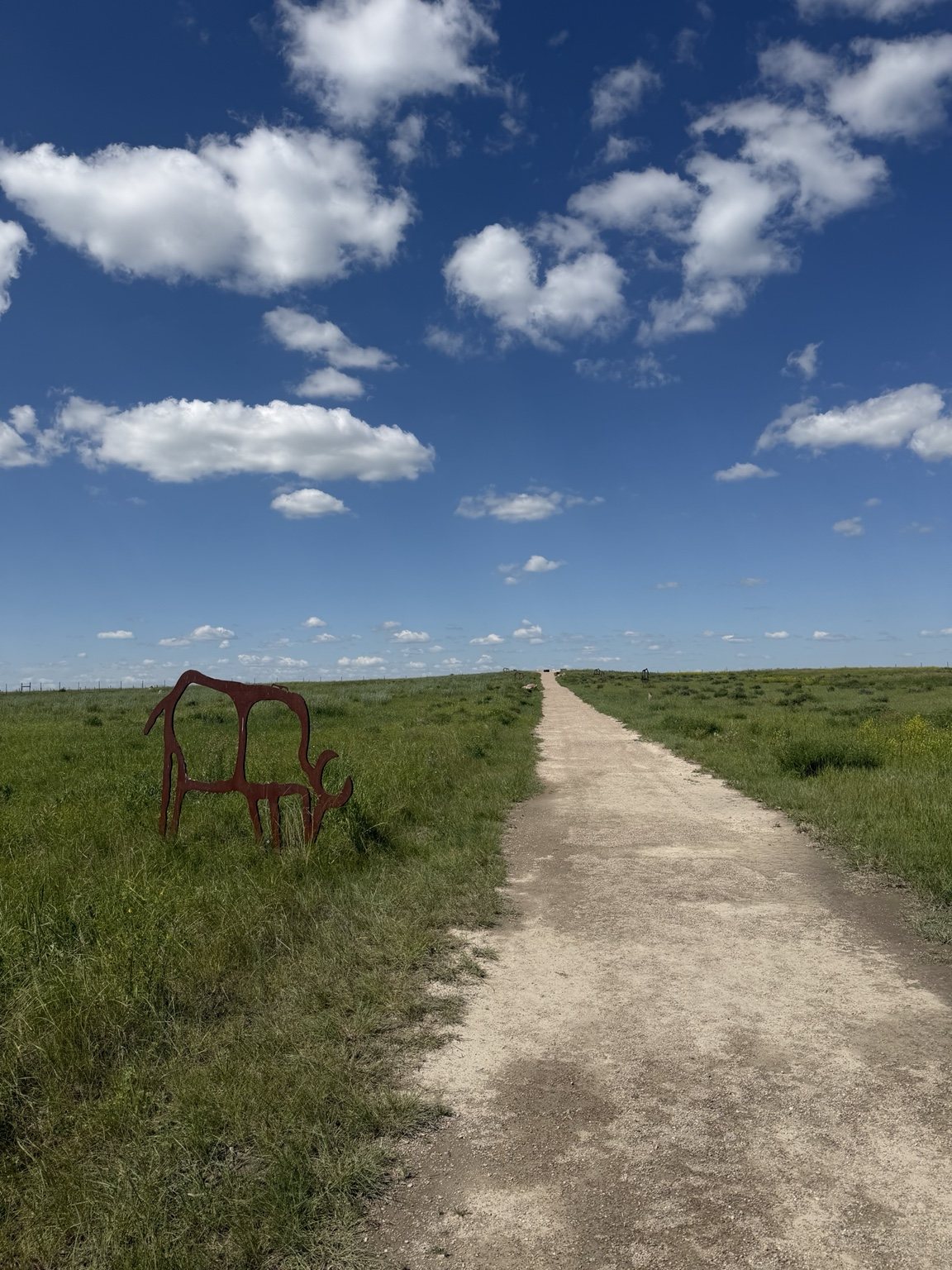
We also walked out toward the bison viewing area.
My grandma had warned me that there was never a guarantee we would see the herd because they have a large area to roam, so expectations were managed.
Still, we were a little disappointed when there were no bison in sight.
We could see construction in the distance and wondered if that had something to do with it. Later, I learned the herd had been temporarily moved during the construction period.
At least they had a better excuse for skipping the hike than I did at Blackstrap.
Lunch, Museum Time and Saskatchewan Sarsaparilla
By that point, lunch sounded excellent.
We headed back inside and ate at the on-site restaurant, where we had bannock, I ordered a bison melt, and we tried Saskatchewan-made sarsaparilla.
The sarsaparilla was unlike anything I had tried before, which made it a fun little addition to a day already built around learning and trying new things.
After lunch, we went through the museum and art gallery.
Wanuskewin’s facility is exceptionally well done. The exhibits connect archaeology, treaties, bison, art, culture and contemporary Indigenous life, and there is enough information to keep people like us occupied for a dangerous amount of time.
For context, my grandma and I are the type of people who can spend eight hours in a museum and emerge confused about why everyone else left.
A Circle, a Hoop Dancer and Visitors From Everywhere
At 1 p.m., we joined Wanuskewin’s daily dance and music presentation. The summer program features dancers, drummers and musicians sharing their art form and stories with visitors.
Our presenter was hoop dancer Lawrence A. Roy Jr.
We sat in a circle while Lawrence shared stories and talked about circles and connectedness. He pointed to the circles that appear throughout life and culture, including the earth, foods, the cycle of life and the medicine wheel.
Then he danced.
And kept adding hoops.
And adding hoops.
By the end, the number of hoops involved felt frankly unreasonable.
His three children were there watching him, and the presentation felt intimate and personal rather than distant or staged. Lawrence also asked everyone where they were visiting from.
People had come from all over the world.
That stuck with me.
The Conversation on the Drive Home
On the drive back to Warman, my grandma and I talked about what we had learned.
She reflected on how little First Nations history she had been taught growing up and how much she appreciates opportunities to learn now.
We both appreciated that Wanuskewin acknowledges painful parts of history without allowing those tragedies to become the entire story.
The experience also centres culture, knowledge, art, family, land, resilience and continuity. The people and cultures being interpreted at Wanuskewin are not presented as something that only existed in the past.
That mattered to us.
I had gone to Wanuskewin because it was close by and had trails.
I left feeling like the trails were only one part of the experience.
They connected the landscape to the stories, and the stories changed the way we looked at the landscape.
Before You Go
- Give yourself more time than you think you need if you like museums and interpretive signs.
- The trail difficulty varies, and some valley climbs can feel substantial in hot weather.
- Check the day’s public programming before you arrive and build your visit around it.
- Do not assume you will see the bison on every visit.
- Try the restaurant. Bannock and Saskatchewan-made sarsaparilla were excellent additions to the day.
Ella-vated Trail Rating
| Category | Rating | Notes |
|---|---|---|
| Trail + Learning Combo | 10/10 | You are not just walking through the landscape, you are learning how to read it. |
| Interpretive Signage | 10/10 | Grandma and I read everything. Casual museum behaviour remains unavailable. |
| Valley Views | 10/10 | The bridge and lookout made the climbs completely worth it. |
| Hill Effort in 30°C Heat | 8/10 | Gorgeous, but the valley does eventually make you earn your way back out. |
| Bison Spotting Success | 0/10 | The bison had been temporarily relocated. Extremely valid excuse, still no bison. |
| Bison Jump Lightbulb Moment | 11/10 | Walk past the sculptures, learn the story, come back and suddenly understand the whole scene. So good. |
| Lunch Experience | 10/10 | Bannock, bison melt, Saskatchewan-made sarsaparilla. No notes. |
| Hoop Dance Presentation | 10/10 | Lawrence A. Roy Jr., an alarming number of hoops, and a really memorable conversation about circles and connectedness. |
| Museum Sponge Potential | dangerous | You could lose an entire day in there if you are the type to read every label. We are. |
| Final Ella-vated Rating | 10/10 | The most complete stop of the trip. Trails, culture, food, history, art and a genuinely memorable afternoon. |
Wanuskewin was the last-minute addition to the itinerary.
It ended up being the stop I am happiest we squeezed in.
This article is part of the SaskTrails Storyteller Series. Thank you to the Saskatchewan Parks and Recreation Association and Trans Canada Trail for supporting this initiative.
Ella Gidluck is the Saskatchewan Trails Association’s 2026 Summer Storyteller. She’s on a mission to prove Saskatchewan trails are cooler than people think, even when the mosquitoes disagree.



Leave a Reply
Want to join the discussion?Feel free to contribute!